

Among more than 150 successful co-creation collaborations within the INDUSAC project, one team decided to take one step further. In November 2023, when the INDUSAC platform just became available to a wider audience, the INDUSAC team at the Jožef Stefan Institute in Ljubljana shared the platform’s potential with companies in Slovenia. Among others, entrepreneur Anton Skubic jumped on the opportunity to have his business challenges solved by a team of students and researchers. While he was already managing and operating a classical cafe, he wanted to explore an idea of designing a virtual cafe to enable visitors from all around the world to meet and participate in different activities remotely.
In order to disseminate information about the challenge with as many students and researchers from Europe and beyond, team at the Jožef Stefan Institute shared information with their colleagues from the Enterprise Europe Network. Word soon spread out – students and researchers started with submitting motivation letters for the challenge.
The initially selected team of students, together with Anton, designed during summer of 2024 the key concepts of a modern platform with virtual and customizable spaces of dedicated activities, topics and events to capture interest of individuals with diverse backgrounds from all around the world, while creating immersive experience and a sense of belonging to the community.
Virtual cafe conceptualization was followed with the development of functionalities, optimization and a strategy for search engine optimisation (SEO). Mohammad Farid was mainly responsible for the front-end development and integrating real-time interaction options with optimizing system performance and security. With completion of this phase, the initial platform of the Virtual Cafe became available. Lali Kurdadze, another team member, describes it as an interactive online platform for meetings and virtual socialization with themed rooms, offering diverse and interesting experience beyond traditional video calls. For example, among them we can find:
- cafe lounge for casual conversations,
- music lounge to enjoy music together,
- art studio to create and share artistic vision with other creators,
- study room for learning together in a quiet virtual space,
- language hub to practice languages with native speakers from around the world,
- business hub for networking with professionals,
- and many more!
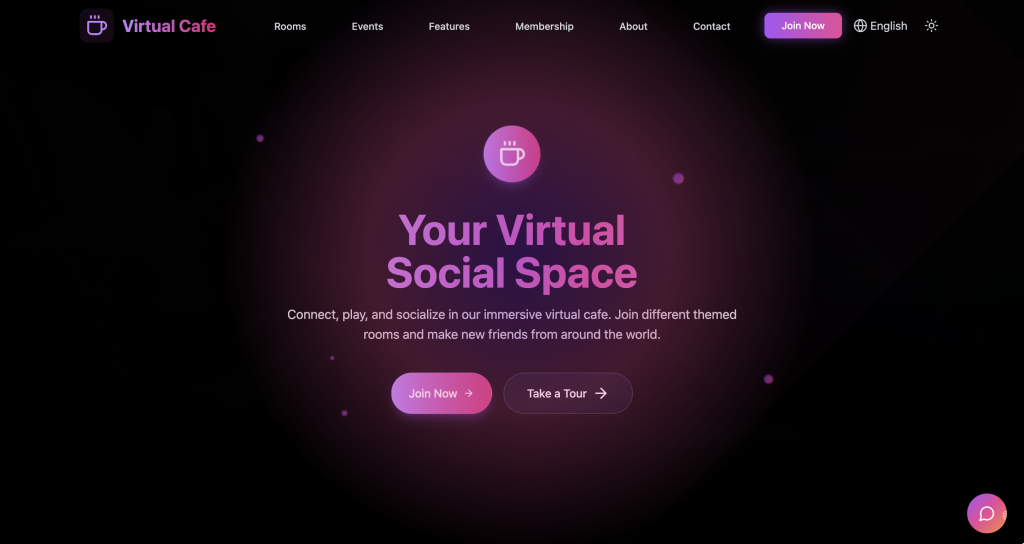
Beside pre-made rooms, visitors will have an option to create private rooms with other topics, higher audio and video quality, priority access to events, and other inclusive features. The latter were optimized during the development phase on the basis of in-depth data analysis to identify key trends and patterns, along with developed predictive models and created insightful data visualizations by Pradyumna Kapure. The next step will be to present the Virtual Cafe to a wider audience. Since the cooperation between students and the company proved to be successful and promising, they decided to move on to the next step: establish a new company. This company will manage, operate, promote and further develop the Virtual Cafe. These activities will be crucial as they were already during the development phase, where team member Ritoprovo Roy analyzed market trends and created data visualizations, along with providing insights to enhance user engagement.
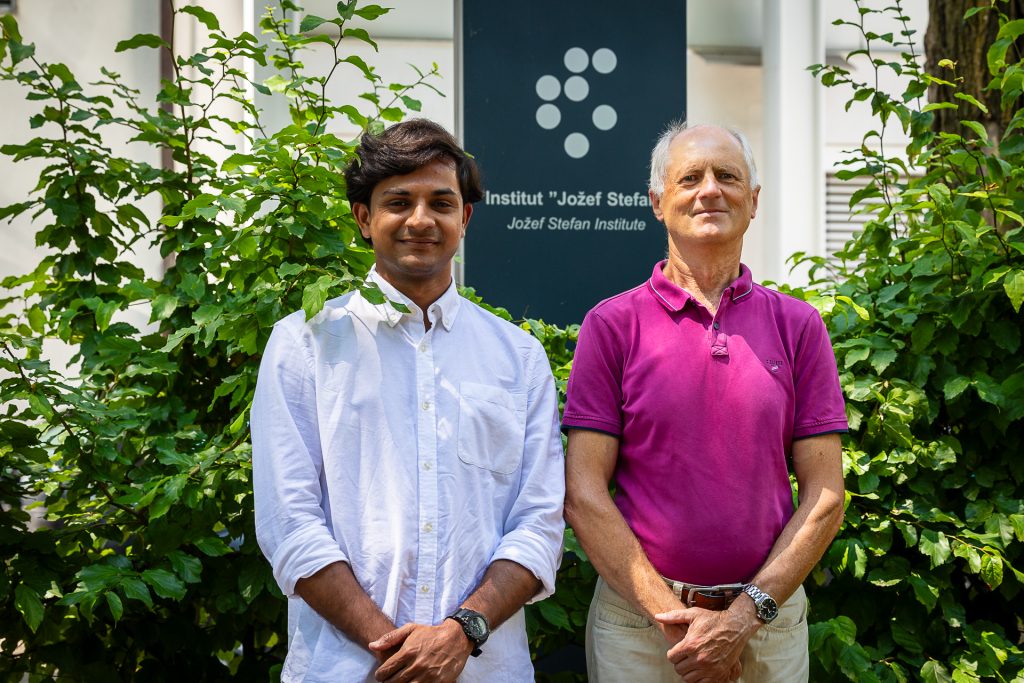
Mohammad Zeeshan and Anton Skubic at the Jožef Stefan Institute (Photography: M. Verč, 2025)
The representative of the student team, Mohammad Zeeshan, and Anton Skubic, entrepreneur and initiator of the project, in the summer of 2025 already started with initial steps to register a new company, when they also met in person to share their experience with the INDUSAC project representatives at the Jožef Stefan Institute in Ljubljana.
While the cooperation started as a co-creation project, it soon exceeded its initial scope and with promise of a new company on the international level, it represents one of the objectives of the Enterprise Europe Network to support companies and innovators in their business ambitions. Mohammad Zeeshan and Anton Skubic with the rest of the team will have opportunity on their journey to receive further support from Enterprise Europe Network as well.